
Proven Managed Web Hosting Services We Offer: 7 Solutions
You just invested tens of thousands of dollars engineering a custom, high-performance web application. Do not jeopardize that investment by deploying it on a budget shared hosting plan. For scaling startups and enterprise brands, web hosting is not a commodity; it is the foundational infrastructure of your business. Slow server response times destroy your Core Web Vitals, leading to severe SEO penalties. Security vulnerabilities expose your customer data to catastrophic breaches. Unexpected downtime during a major product launch results in thousands of dollars in lost revenue per minute.
[toc]
Enterprise Managed Web Hosting and Server Solutions: The Foundation of Digital Scaling
You just spent tens of thousands of dollars engineering a high-performance web application. Deploying it on a budget shared hosting plan is one of the most damaging decisions you can make for your business.
For scaling startups and established enterprise brands, managed web hosting is not a commodity purchase. It is the foundational infrastructure your entire digital operation runs on. Slow server response times destroy your Core Web Vitals scores and trigger SEO penalties that take months to recover from. Security vulnerabilities expose your customer data to breaches that damage your brand permanently. Unexpected downtime during a product launch or a high-traffic campaign costs real money — sometimes thousands of dollars per minute.
At MarkupMarvel, we engineer high-performance digital products, and we provide the enterprise-grade hosting infrastructure required to keep those products running without interruption. This page covers why managed web hosting matters for serious businesses, and exactly how our server solutions protect your digital assets around the clock.

1. What Managed Web Hosting Actually Means
Managed web hosting is a service where a dedicated technical partner handles the full setup, administration, and ongoing support of your server environment. That includes automated backups, security patching, SSL certificate management, performance monitoring, and incident response. Your team focuses on running the business. The infrastructure runs itself in the background — or more accurately, a team of engineers runs it for you.
This is a fundamentally different arrangement from standard shared or unmanaged hosting, where you are handed server credentials and left to figure out the rest.
The distinction matters for a few specific reasons:
Server configuration requires expertise. Setting up Nginx for a headless React application is different from configuring Apache for a Laravel backend. Getting it wrong creates performance gaps and security exposure that are not always obvious until something breaks under load.
Security patching is time-sensitive. Zero-day vulnerabilities in PHP, MySQL, and Linux server environments are discovered regularly. On an unmanaged server, those patches get applied when someone on your team notices them — which is often long after the window for exploitation has opened. With managed web hosting, patches are applied on a defined schedule as part of the service.
Support response time has a direct cost. When a shared hosting server goes down, you enter a support queue with thousands of other users. When a managed hosting client has a problem, the response is fast and specific to your environment, not a generic troubleshooting script.
2. The Hidden Costs of Poor Infrastructure
Many businesses treat hosting as an afterthought. They pick the cheapest plan available, set it up once, and move on. That decision creates technical debt that shows up in three specific ways — usually at the worst possible moment.
The SEO penalty. Google weighs Time to First Byte (TTFB) as a Core Web Vitals signal. Cheap shared servers have high latency by design — they are splitting resources across hundreds of accounts. Your site loads slowly, fails the PageSpeed threshold, and drops in search rankings. Every month on a bad server is a month your competitors on better infrastructure pull further ahead.
The security liability. Shared hosting places your website on the same physical server as dozens or hundreds of other sites. If one of those sites gets hit with malware or a brute-force attack that overwhelms server resources, your site suffers the consequences — even though you did nothing wrong. Unmanaged servers compound this by leaving known vulnerabilities unpatched for extended periods.
The downtime cost. Budget hosting providers have no meaningful SLA. When the server goes down, you wait. For a business running paid advertising campaigns, an e-commerce store, or a B2B platform where clients log in daily, unplanned downtime is not an inconvenience. It is a direct revenue loss with a compounding reputation cost.
According to Google Web Vitals research, server response time is one of the primary contributors to LCP scores — the metric that most directly correlates with user bounce rates and conversion performance.
3. Dedicated Cloud and VPS Architecture
The foundation of our managed web hosting service is isolated server infrastructure. We do not put your application on a shared environment. We deploy on Virtual Private Servers (VPS) or dedicated cloud instances through enterprise-grade providers, giving your platform its own allocated resources.
What isolation actually means for your site:
Your RAM, CPU, and bandwidth are yours. A traffic spike on another website does not throttle your performance. A malware infection on a neighboring account does not reach your environment. Your application behaves predictably because the resources powering it are consistent and dedicated.
Custom server environments configured for your stack:
A headless React frontend running on Next.js has different server requirements than a WooCommerce store or a Laravel API. We configure the server environment to match your specific codebase — Nginx rules, PHP version, memory limits, caching layers, and process managers — rather than dropping your application into a generic shared configuration and hoping it holds up.
Global CDN integration:
We route your traffic through an enterprise Content Delivery Network, caching static assets at edge locations close to your users. A visitor loading your site from Singapore should not be waiting for a server response from a data center in the United States. CDN integration significantly reduces latency for international audiences and takes load off the origin server during high-traffic periods.
4. Ironclad Security and Compliance
A data breach does not just cost money to remediate. It destroys the trust that took years to build — and for B2B businesses especially, that trust is the product.
Our managed web hosting security protocols cover every layer of the server environment, from the operating system to the application boundary.
Automated SSL certificate deployment and renewal. We deploy high-grade SSL certificates, force HTTPS at the server level, and handle automatic renewals before expiry. No manual certificate management. No lapsed SSL warnings appearing for your users.
Web Application Firewall (WAF) rules. We implement strict firewall configurations that identify and block malicious bot traffic, credential stuffing attempts, and brute-force login attacks before they reach your application layer. Bad traffic gets stopped at the perimeter.
Automated off-site backups. Daily backups of your entire file system and database are stored on a completely separate, secure server — not on the same machine running your application. If something goes wrong, we can restore to a stable state within minutes.
Server-level DDoS mitigation. Traffic anomalies are flagged and absorbed at the network layer. A coordinated volumetric attack does not take your site offline — it gets filtered before it reaches your server.

5. Domain Registration and DNS Management
Expired domains and misconfigured DNS records cause operational disruptions that are entirely avoidable — and surprisingly common in businesses that handle these things informally.
Our managed web hosting service includes full domain and DNS management so your digital real estate stays current, correctly configured, and protected.
Centralized domain procurement. We handle registration, renewal scheduling, and WHOIS privacy protection for your primary domains and any supporting properties. Renewal deadlines are managed proactively — not discovered after the domain has already lapsed.
Precise DNS record management. MX records, CNAME entries, SPF and DKIM configuration, A record propagation — these details directly affect your email deliverability, your subdomain routing, and your site availability. Errors here are invisible until something stops working. We manage and audit these records as part of the ongoing service.
Zero-downtime server migrations. Moving from a legacy hosting environment requires careful DNS propagation planning. We handle the full migration process — database transfers, file system moves, DNS cutover timing, and post-migration verification — without taking your site offline during the transition.
6. Frequently Asked Questions About Managed Web Hosting
Q1: What is the difference between managed web hosting and standard shared hosting?
Managed web hosting provides isolated server resources, proactive security patching, automated backups, and dedicated expert support — all handled by a technical team on your behalf. Standard shared hosting places your site on a server with hundreds of other accounts, leaving you responsible for your own security, performance configuration, and support escalation.
Q2: Will my site experience downtime during a migration to MarkupMarvel hosting?
No. Our engineers handle the full DNS propagation and database migration process in the background. Traffic is rerouted to the new infrastructure only after verification is complete, ensuring your live users experience no interruption during the transition.
Q3: What does a 99.9% uptime guarantee actually mean?
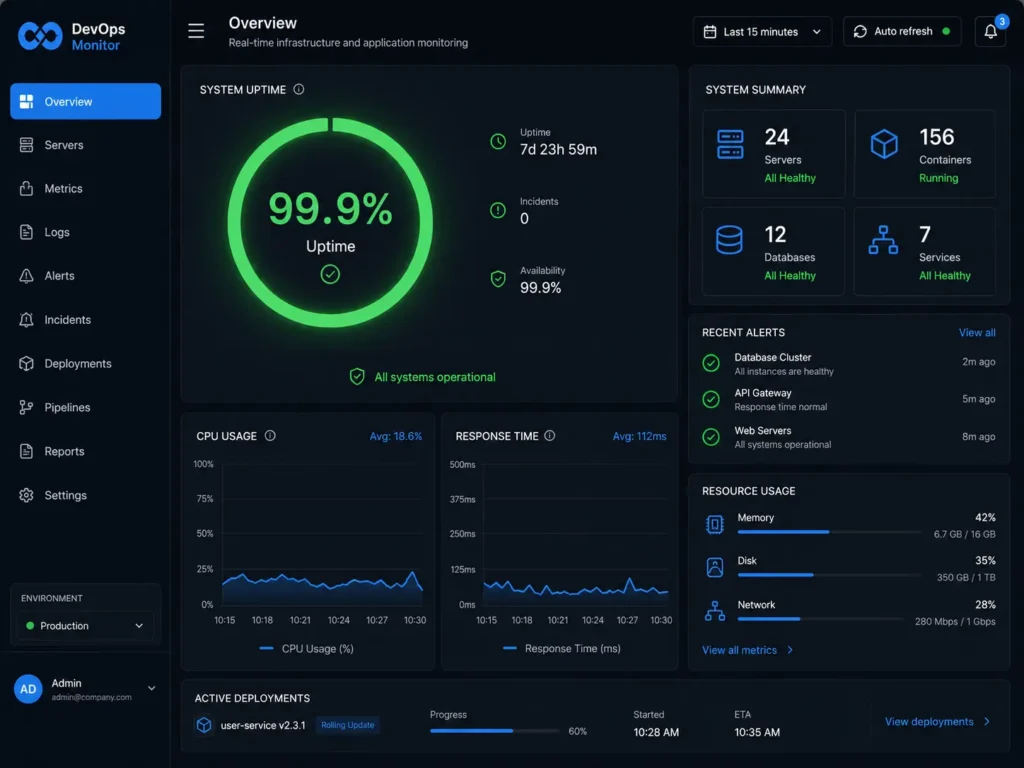
A 99.9% uptime SLA means your site will not be offline for more than 43.8 minutes in any given month. Achieving this requires redundant server architecture, automated failover systems, and active 24/7 monitoring — not just a marketing claim on a pricing page.
Q4: Do you provide automated backups?
Yes. We configure daily off-site backups of your complete file system and database, stored on a separate secure server. If a critical error or data loss event occurs, restoration to a stable state happens within minutes, not hours.
Q5: Can you manage hosting for applications built on specific stacks?
Yes. We configure server environments around your specific technology stack — whether that is a Next.js frontend on Node.js, a Laravel or WordPress backend on PHP, a Python application, or a custom containerized setup. The server is built around your code, not the other way around.
Q6: Is managed web hosting worth the cost compared to self-managed VPS?
For businesses where the website or application is a primary revenue channel, yes — by a significant margin. The cost of a single security incident, a major downtime event, or months of degraded performance from a misconfigured server consistently exceeds the cost of managed hosting over the same period. The real question is whether your team has the expertise and bandwidth to manage infrastructure at a professional level alongside everything else they are responsible for.
Focus on Your Business. We Keep the Infrastructure Running.
When you partner with MarkupMarvel for managed web hosting, you are not renting server space. You are bringing on a dedicated DevOps team that monitors your infrastructure around the clock — every day of the year.
Server configurations, security patches, DNS records, backup verification, uptime monitoring — that is our responsibility. Your team focuses on the work that actually grows your business.
According to Cloudflare infrastructure research, even a one-second improvement in server response time can meaningfully improve conversion rates across e-commerce and lead generation platforms. Infrastructure quality is not a background concern. It directly affects revenue.
If your current hosting setup is holding your business back — slow load times, security gaps, a support team that does not respond — we can fix that. Our engineers will audit your current environment, identify the specific vulnerabilities and bottlenecks, and map out a migration plan that moves you to stable ground without disrupting your live traffic.
Explore
Other Services We Provide

E-Commerce Catalog Management: 3 Proven Ways to Scale
Growth in e-commerce comes with a problem most brands do not see coming: the sheer...
Service Details →
Custom Booking Reservation Systems: 7 Powerful Features
A double booking that results in two customers showing up for the same slot. A...
Service Details →
Multi-Vendor Marketplace Development: 7 Proven Strategies
The traditional, single-seller e-commerce model is rapidly evolving. If you look at the most lucrative,...
Service Details →